
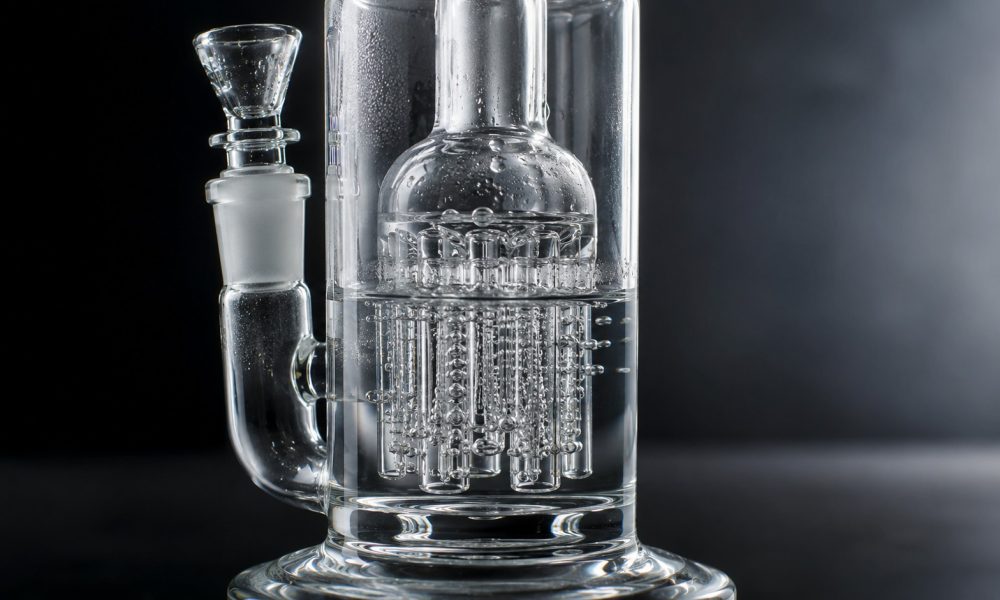
At first glance, a percolator can look like an elaborate piece of glass inside a water pipe. In practice, it serves a straightforward purpose: it breaks a larger stream of smoke into many smaller bubbles as that smoke passes through water.
That process is called diffusion, and it is the main reason water pipe percolators have become such a common feature in modern glass designs. By creating more bubbles, a percolator increases the amount of surface area where smoke and water come into contact. That can change the temperature, feel, sound, and airflow of each draw.
But not every percolator works the same way. Tree percolators, honeycomb discs, showerhead designs, inline chambers, and other styles all approach diffusion differently. Some prioritize maximum bubbling; others favor open airflow or easier cleaning.
So why do water pipes use percolators, and does more diffusion always mean a better experience? Here is how the mechanics work, what different designs change, and what to consider before choosing a piece.
What Are Water Pipe Percolators?
Water pipe percolators are internal structures designed to spread smoke through water in smaller bubbles instead of allowing it to pass through as one larger stream. They may be built into the base of a pipe, suspended inside a separate chamber, or incorporated into multiple levels of a more complex piece.
Smoke is drawn through a series of holes, slits, arms, or openings. Those openings divide the airflow into smaller pathways. Once submerged, each pathway releases bubbles into the water.
A basic downstem already performs a form of diffusion. A downstem with several slits creates more bubbles than a single open-ended tube. A dedicated percolator takes that concept further by adding more openings, more contact points, or an additional water chamber.
This is why water pipe percolators are often associated with larger or more technical glass pieces. They add internal complexity, but that complexity has a functional purpose: controlling how smoke moves through water before it reaches the mouthpiece.
Why Do Water Pipe Percolators Create Smaller Bubbles?
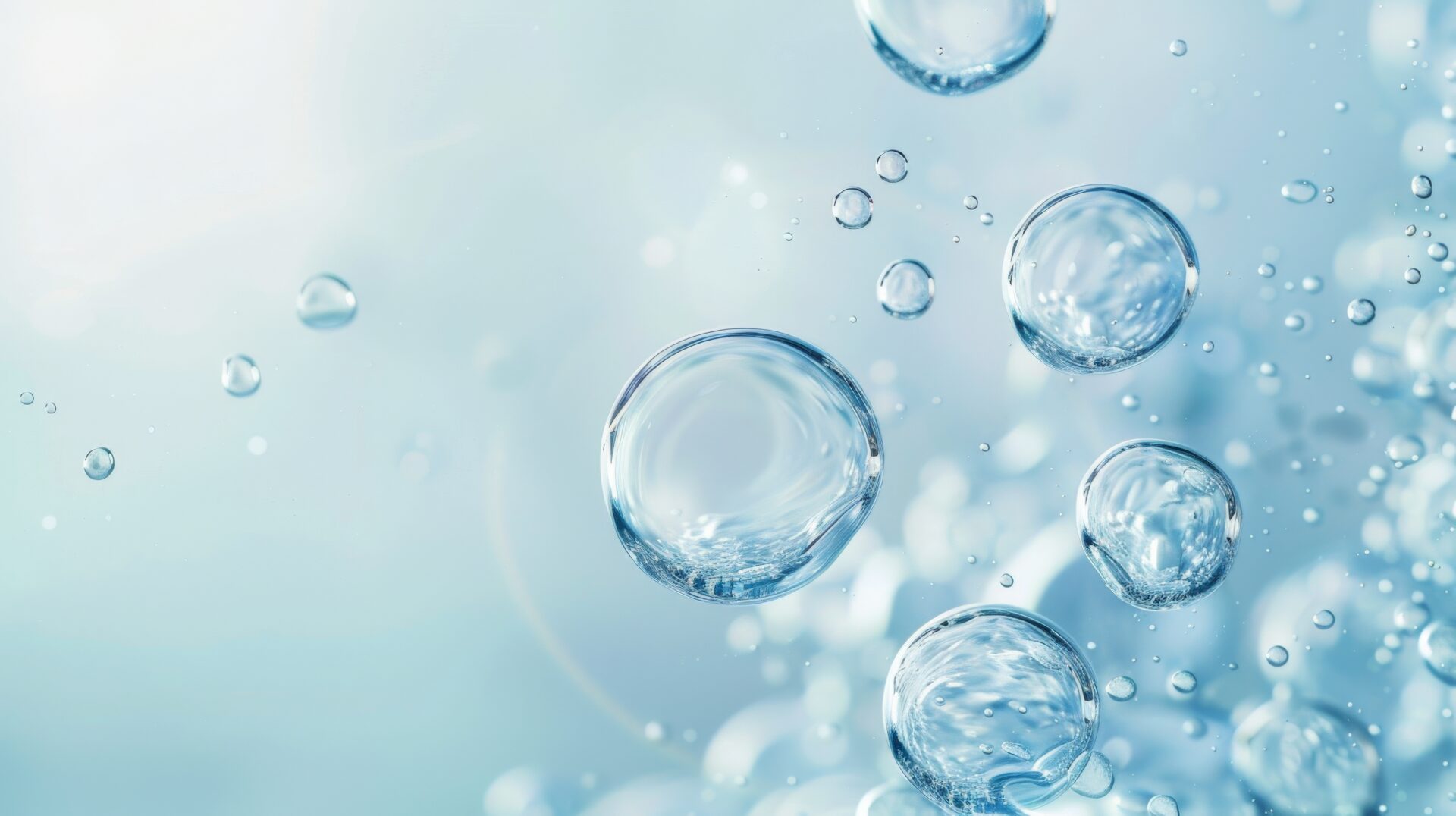
Bubble size matters because it changes surface area.
Imagine one large bubble moving through water. Only the outside surface of that bubble touches the surrounding liquid. Now divide the same volume of gas into dozens of smaller bubbles. The total amount of surface area exposed to water increases.
That is the core physics behind water pipe percolators. More openings generally create more bubbles, and smaller bubbles create more contact between the smoke and water.
This increased contact can affect the experience in several ways:
- More heat exchange: Smaller bubbles expose more smoke to cooler water.
- More visible diffusion: The chamber may fill with dense streams of tiny bubbles.
- Different airflow: The number and size of openings influence resistance during a draw.
- More water interaction: Smoke spends more of its path moving through or around water.
This does not mean every highly diffused piece is automatically better. A design with hundreds of tiny holes may require more effort to draw through, while a more open percolator may feel easier and faster. Good design is usually about balance.
How Water Pipe Percolators Change Temperature
One of the most noticeable functions of water pipe percolators is additional cooling through water contact.
When warm smoke passes through cooler water, heat transfers from the smoke into the liquid. Creating smaller bubbles increases the contact area available for that heat exchange. A second chamber or additional percolator can repeat the process before the smoke reaches the mouthpiece.
The result is often a cooler-feeling draw compared with a dry pipe or a water pipe with minimal diffusion. That difference is sensory, not a claim that the smoke becomes harmless or completely filtered.
Water temperature, chamber size, airflow speed, fill level, and the number of percolators can all influence how much cooling actually occurs. A complicated piece filled incorrectly may perform worse than a simpler, well-designed setup.
For a broader look at glass as a material and why it remains popular for smoking accessories, read Why Glass Pipes Are a Popular Choice for Smoking.
Do Water Pipe Percolators Filter Smoke?
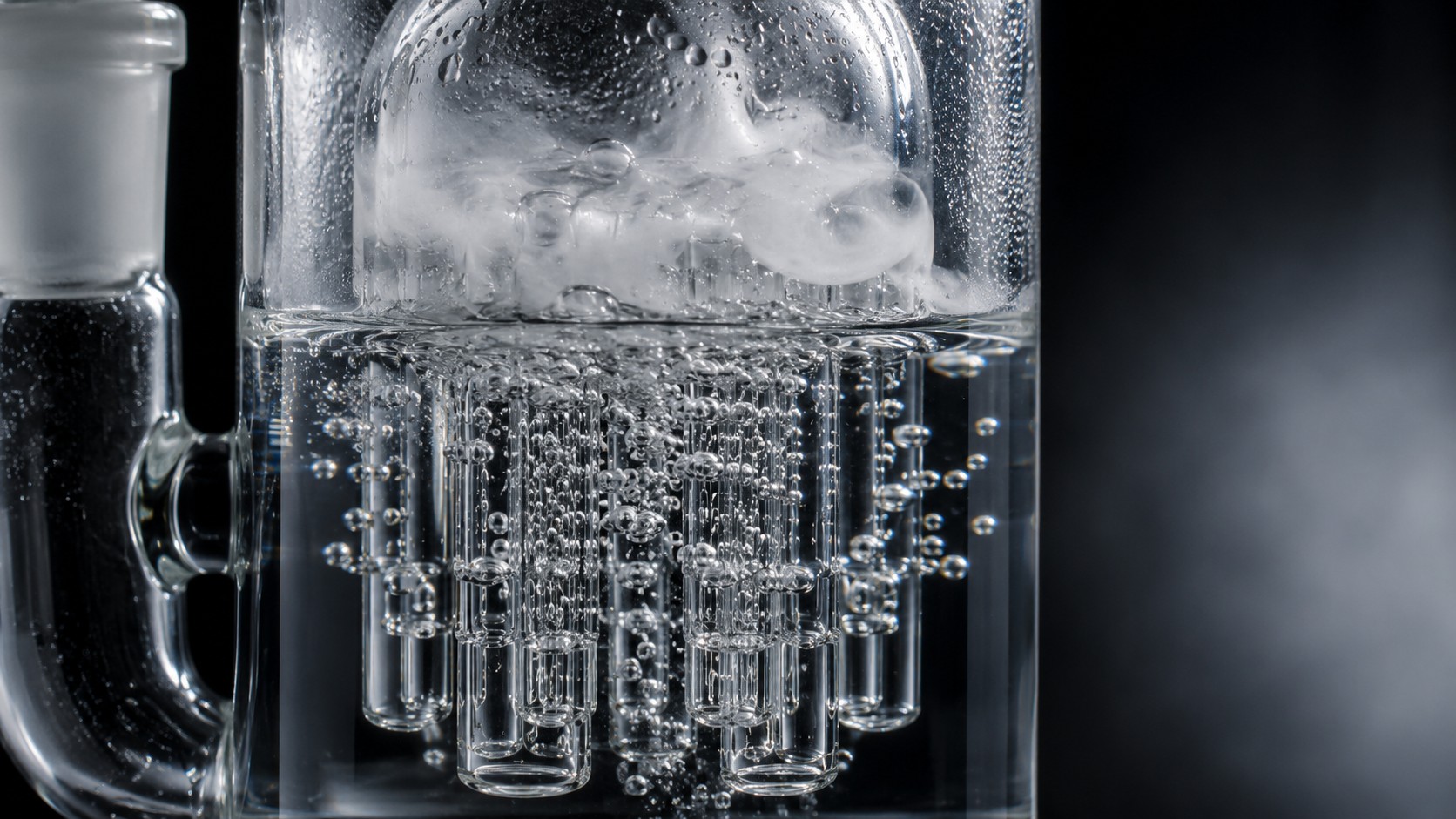
The word “filter” can be misleading when discussing water pipe percolators. Water can trap some ash and larger debris, and different compounds may interact with water in different ways, but a percolator should not be treated as a complete filtration system or a way to eliminate the risks associated with smoke inhalation.
The main job of a percolator is diffusion. It forces smoke through more water contact points, changing bubble size, temperature, and draw characteristics.
Research into water filtration and cannabis smoke has produced mixed findings about exactly which compounds are retained and in what amounts. A recent preprint examining cannabis smoke filtration evaluated chemical differences among water-filtered and unfiltered smoke, while earlier reviews of water filtration and cannabis smoke also noted that effectiveness depends heavily on the device and amount of water contact.
The practical takeaway is simple: water pipe percolators can increase water contact, but more bubbling should not be confused with guaranteed purity, safety, or complete removal of smoke compounds.
Why Airflow Matters Just as Much as Diffusion
A percolator can create impressive bubbling and still be frustrating to use if airflow is too restricted.
Every hole, slit, chamber, bend, and water level adds resistance. In glass terminology, this resistance is often described as drag. Some people prefer a very open draw with minimal effort. Others prefer a slower pull with more bubbling and a more deliberate feel.
The best water pipe percolators balance diffusion with usable airflow. That is why the shape of the percolator matters as much as the number of openings.
A few variables influence drag:
- Opening size: Tiny holes can create finer bubbles but may add resistance.
- Number of openings: More diffusion points can distribute airflow more evenly.
- Water level: Too much water can make a piece harder to draw through.
- Chamber shape: Narrow pathways and sharp turns can restrict movement.
- Residue buildup: A dirty percolator may gradually become more difficult to use.
This balance is why experienced glassmakers refine internal geometry so carefully. Functional glass is not only about appearance; airflow is part of the design.
42 Degrees carries a range of water pipes and hand pipes for people comparing different shapes, sizes, materials, and diffusion styles.
Common Types of Water Pipe Percolators
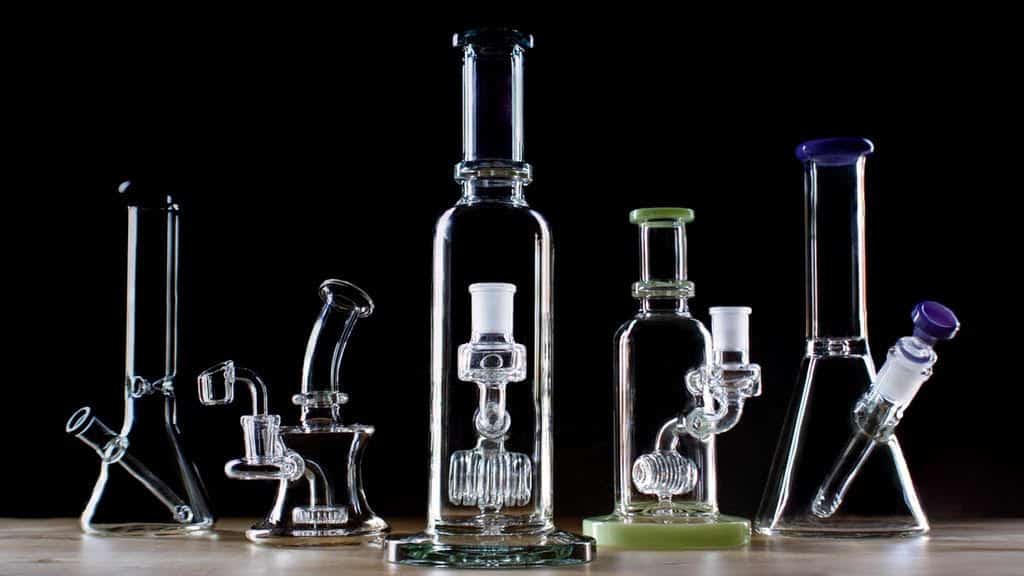
There is no single best design for everyone. Different water pipe percolators create different bubble patterns, airflow characteristics, cleaning requirements, and visual styles.
Tree Percolators
Tree percolators use multiple vertical arms with slits near the bottom. They can create substantial diffusion, but the narrow arms may be more delicate and can require careful cleaning.
Honeycomb Percolators
A honeycomb percolator is a flat glass disc filled with many small holes. Smoke passes through the disc, creating a dense field of small bubbles in a compact space.
Showerhead Percolators
A showerhead design uses a flared tube or bell with slits arranged around the lower edge. These water pipe percolators often balance diffusion with relatively sturdy construction.
Inline Percolators
Inline percolators use a horizontal tube with slits along its length, creating several diffusion points across the chamber.
Matrix and Grid Percolators
Matrix and grid designs use many small openings in a compact structure. They can create fine bubbling, but more openings also mean more surfaces where residue can collect.
Are More Percolators Always Better?
Not necessarily.
A water pipe with two or three percolators may create more stages of diffusion, but each additional stage also introduces more glass, more water, more resistance, and more areas where residue can collect.
For some people, a single well-designed percolator offers the right balance. Others may prefer a multi-chamber piece for its visual effect, bubbling pattern, or slower draw.
When comparing water pipe percolators, consider these questions:
- Do you prefer an open draw or more resistance?
- How much time are you willing to spend cleaning the piece?
- Do you want a compact piece or a larger multi-chamber design?
- Is durability more important than intricate internal glasswork?
- Do you value visual bubbling as much as functional simplicity?
More complexity is not automatically an upgrade. The right choice depends on how the entire piece works as a system.
Why Water Level Is Critical for Percolator Performance
Even the best water pipe percolators will not work correctly without the right amount of water.
If the water level is too low, some openings may sit above the surface and fail to produce bubbles. If the level is too high, airflow resistance can increase, and water may travel farther up the piece than intended.
A good starting point is to add enough water to submerge all active slits or holes without excessively filling the chamber. Then test the airflow without applying heat. If the draw feels overly restricted or water approaches the mouthpiece, reduce the level slightly.
Multi-percolator pieces may require separate water levels in each chamber. Small adjustments can make a noticeable difference in both bubbling and resistance.
Why Cleaning Matters More With Water Pipe Percolators
The same small holes that create fine bubbles can also collect residue over time. As buildup narrows those openings, airflow and diffusion can change.
That makes cleaning especially important for complicated water pipe percolators. A simple open-ended downstem may be easy to rinse, while a matrix or tree percolator may require more time and attention.
Regular cleaning helps preserve:
- Open airflow through small holes and slits
- Consistent bubble production
- Clear visibility through glass
- The intended taste and overall experience
- The appearance of intricate internal glasswork
For practical maintenance guidance, see How to Keep Your Glass Pipes Clean and Durable. You can also browse cleaners and maintenance products available through 42 Degrees.
A useful rule is to clean before residue becomes difficult to reach. The more intricate the percolator, the more valuable routine maintenance becomes.
How to Choose the Right Water Pipe Percolators
The best way to choose among water pipe percolators is to look beyond visual complexity. A dramatic multi-chamber piece may be impressive, but a simpler percolator may better fit your routine.
Prioritize five factors:
- Airflow: Decide whether you prefer an open draw or more resistance. More holes do not always mean easier airflow.
- Cleaning access: Intricate percolators usually require more maintenance.
- Glass construction: Inspect joints, balance, base stability, and exposed sections.
- Water capacity: Multi-chamber pieces may require more precise fill levels.
- Size and storage: Larger pieces need more room and careful handling.
The goal is not to find the piece with the most internal parts. It is to find a water pipe whose percolator, airflow, size, and maintenance requirements work together.
For another look at pipe materials, read Glass Pipe vs. Silicone: Which One Is Better?.
So, Why Do Water Pipes Use Percolators?
Water pipe percolators exist to control how smoke moves through water. By splitting one stream into many smaller bubbles, they increase water contact, encourage heat exchange, and change the resistance and feel of each draw.
Different designs accomplish that in different ways. Tree percolators distribute smoke through multiple arms. Honeycomb discs use dozens of small holes. Showerhead, inline, matrix, and grid designs each create their own balance of diffusion and airflow.
The most important point is that more bubbling is not automatically better. Great functional glass is about balance: enough diffusion to create the desired experience without excessive drag, difficult maintenance, or unnecessary complexity.
For anyone exploring water pipe percolators, the best approach is to compare the entire piece rather than judging one feature in isolation. Consider the percolator design, water level, airflow, chamber size, glass construction, and cleaning needs together.
At 42 Degrees, you can browse water pipes in a range of styles and talk with knowledgeable staff about different percolator designs, airflow preferences, and maintenance considerations.


