
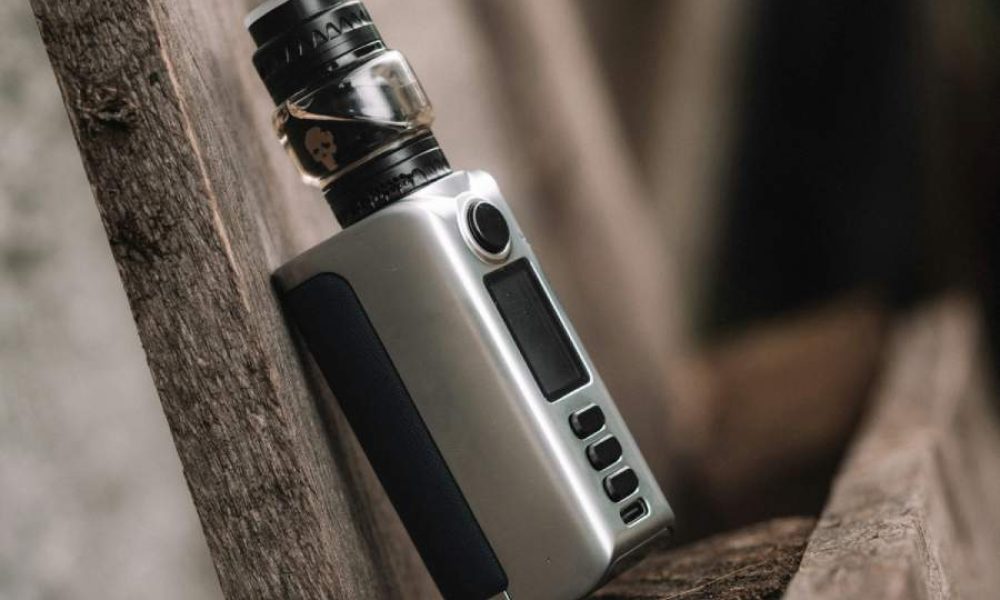
The words on a vape box read like a spec sheet nobody explained. Ohms. Milliamp-hours. Watts. Strip the jargon and only three parts really matter. A battery. A coil. The power running between them. Figure out how those fit and the whole thing stops being intimidating.
Key Takeaways
- The battery powers the coil. The coil turns liquid into vapor, and wattage sets how hard that coil runs.
- Coil resistance and wattage have to match. Push too much power, and the coil burns. Too little and you get nothing.
- Coils wear out. That burnt taste isn’t a broken device. It’s a coil that’s finished.
Pick up any vape and the box throws numbers at you. 0.6 ohm. 3000mAh. 40 watts. For anyone not already fluent, it may as well be another language, and the shop assumes you know it. So most people just nod and hope for the best.
It’s simpler than it looks, though. Every vape in Omaha shops carries the same three parts, whether it’s a tiny pod or a chunky box mod. A battery. A coil. Something to control the power between them. Learn what each one does, and that spec sheet turns into plain, useful information.
So here’s the plain-English version. The battery first. Then the coil. Then wattage, which links the two. Then keeping the whole thing alive. No engineering degree required.
The Battery: What Powers Everything
The battery is the fuel tank. Some devices seal a cell inside that you charge by cable. Bigger mods take removable batteries you charge on their own. Capacity gets measured in milliamp-hours. That’s the mAh on the label. A bigger number, longer between charges.
Removable cells come with responsibility. They’re lithium. They hold a real amount of energy. A torn wrap, or a loose battery rolling around a pocket, is a genuine hazard rather than a theoretical one. So carry spares in a case. Retire anything swollen or nicked. And use the charger the device came with.
Battery basics:
- Built-in cells charge by cable; mods often take removable ones
- Higher mAh means more time between charges
- Loose lithium cells belong in a case, never bare in a pocket
- Retire any battery that runs hot, swells, or has a torn wrap
Coils: Where the Work Happens
The coil is the business end. Picture a tiny heating element wrapped in wicking material. The wick soaks up liquid, the battery fires, and the coil flashes that liquid into vapor. Every other part is really just there to serve this one.
Coils get rated in ohms. Ohms measure electrical resistance, and that single number shapes how a coil behaves. Low-resistance coils, the sub-ohm ones, pull more power. Bigger clouds, warmer draw. Higher resistance runs tighter and cooler. And no coil lasts forever. It’s a wear part, not a fixture.
What to know about coils:
- The heating element that turns liquid into vapor
- Resistance is measured in ohms
- Sub-ohm coils mean more power and bigger clouds
- They wear out and need regular replacement
Wattage: The Power Dial
Wattage is how much power the device pushes into the coil. On an adjustable device, it’s a dial you control. More watts, hotter coil, bigger, warmer hit. Fewer watts, and everything softens. Straightforward enough at the basic level.
The catch is that wattage has limits. Every coil is built for a range, and that range is usually printed right on it. Go too hot, and you scorch the wick, which is where that awful burnt taste comes from. Go too cold,d and the puff turns weak and flavorless.
How wattage plays in:
- Sets how hard the coil runs
- More watts means a hotter, bigger hit
- Every coil has a recommended wattage range
- Too high scorches the wick; too low underwhelms
Why Coils and Wattage Have to Match
Here’s the piece that ties it all together. A coil’s resistance and the wattage you feed it aren’t separate choices. They’re a matched pair. Get one wrong for the other, and it shows right away. That’s why every new coil has a range stamped on the side.
Stay inside that range, and the coil lasts and tastes right. Ignore it, and you either kill the coil fast or sit there wondering why nothing’s happening. Simple pod devices handle all of this for you. That’s a big part of why beginners tend to start on them.
Making them work together:
- Coil resistance and wattage are a matched pair
- The right range is usually printed on the coil
- Staying in range means better taste and longer coil life
- Pods set this automatically; mods leave it to you
Tanks, Pods, and the Draw
The tank or pod does two things at once, holding the liquid and housing the coil. Its shape also decides how the draw feels. A tight, cigarette-style pull is called mouth-to-lung. A wide, airy one is direct-to-lung, the style behind the big clouds.
Airflow sets where you land between those. Open it up for a cooler, airier hit. Close it down for something tighter and warmer. Just match it to what you’re actually after. A cloud machine feels wrong to someone who wanted a quiet little puff, and it cuts the other way just as hard.
The delivery end:
- Tanks and pods hold the liquid and the coil
- Mouth-to-lung is a tight, cigarette-style draw
- Direct-to-lung is airy and built for clouds
- Airflow lets you fine-tune between the two
Get the Right Setup in Omaha
Three parts, one idea. The battery powers the coil. The coil makes the vapor. Wattage sets how hard it all runs. Keep them matched and maintained, and the hardware mostly looks after itself. One rule holds no matter the gear, though. Nicotine is addictive. These are adults-only. And oil-based liquids never belong in a device built for e-liquid, full stop.
Staring at a wall of coils and mods with no clue what pairs with what? Anyone around the metro can bring that question to 42 Degrees Cannabis Dispensary. The staff will match the hardware to how you actually like to vape. Beats decoding the box on your own.


