

Two gummies can list the same amount of THC on the label and still feel noticeably different. One may seem mild and gradual, while another may feel much more pronounced. That inconsistency leads to a common question: why does THC gummy strength seem to change from one product—or even one day—to the next?
The answer is that the number printed on the package is only one part of the experience.
Actual THC gummy strength can be influenced by serving size, cannabinoid type, formulation, manufacturing consistency, digestion, food intake, timing, prior cannabis use, storage, and individual differences in how the body processes orally consumed THC.
Here is why some gummies can feel stronger than others—and what to look at before assuming that two products with the same labeled dose are interchangeable.
What Does THC Gummy Strength Actually Mean?
When people talk about THC gummy strength, they may be referring to several different things:
- the amount of THC in one gummy
- the amount of THC in one labeled serving
- the total amount of THC in the entire package
- how intense the experience feels
- how quickly the experience begins
- how long the effects seem to last
These are related, but they are not identical.
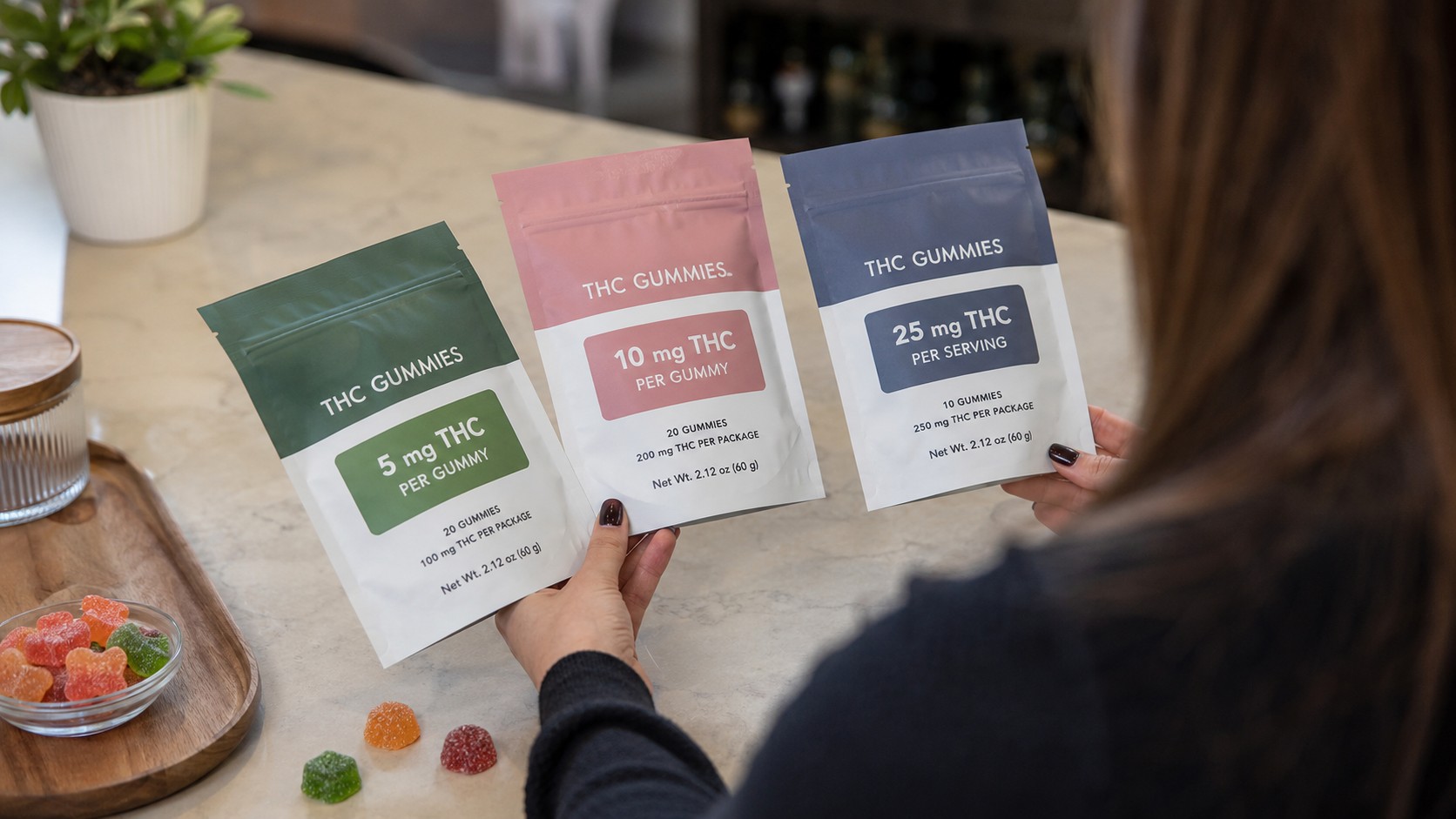
A package might contain 100 milligrams of THC total, divided into ten gummies at 10 milligrams each. Another package might also contain 100 milligrams total but use twenty gummies at 5 milligrams each. The total package strength is the same, while the amount per piece is different.
This is why the first step in comparing THC gummy strength is reading the label carefully. Check both milligrams per serving and milligrams per package rather than relying on the largest number printed on the front.
For a deeper breakdown, read our guide on how to read cannabis labels, THC percentages, terpenes, and more.
The Same Milligram Amount Can Feel Different
A 10-milligram gummy from one product may not feel identical to a 10-milligram gummy from another. Even the same product can seem different under different circumstances.
Several factors can contribute:
- The type of THC or cannabinoid blend may differ.
- The product formulation may affect how cannabinoids are delivered.
- The amount of food in your digestive system may change absorption timing.
- The product may have been stored differently.
- Manufacturing consistency can vary between brands or batches.
- Your previous cannabis use and current tolerance may change your response.
- Taking additional servings before the first has fully developed can create a stronger cumulative experience.
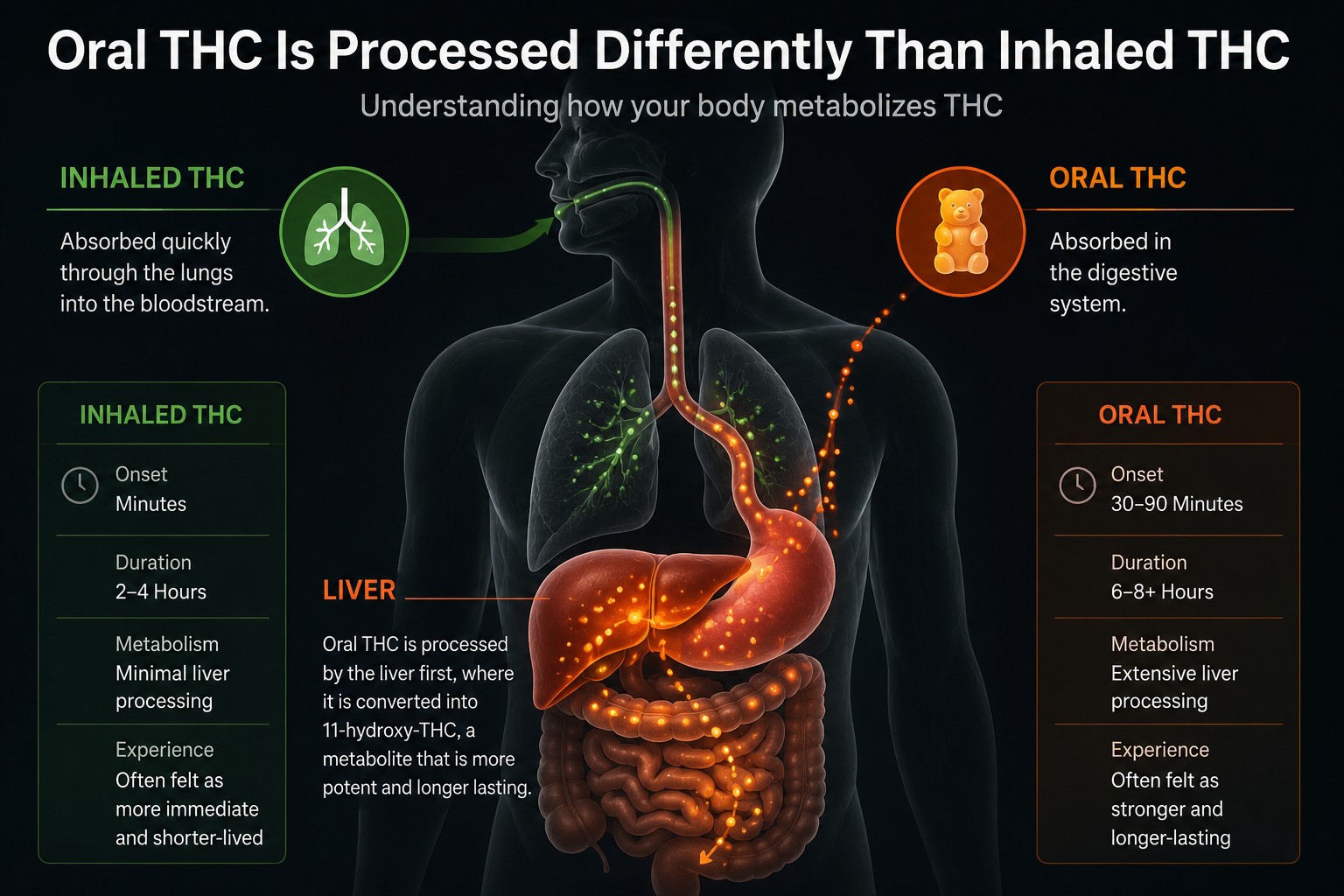
Oral THC Is Processed Differently Than Inhaled THC
One major reason gummies can feel different from inhaled cannabis is the route through which THC enters the body.
When THC is consumed in a gummy, it moves through the digestive system and is processed by the liver. During this process, some THC is converted into metabolites, including 11-hydroxy-THC.
This route takes more time and introduces more variability than inhalation. In controlled research, oral THC has shown delayed absorption and considerable differences between individuals.
A human pharmacokinetic study found that food conditions significantly affected the timing and overall exposure of orally administered THC and its major active metabolite. You can review the research on orally administered THC under fasted and fed conditions.
This helps explain why the same labeled THC gummy strength may not feel identical every time. The experience depends not only on the dose itself but also on what happens during digestion and metabolism.
Food Can Change How a THC Gummy Feels
Whether you have recently eaten can influence how orally consumed THC is absorbed.
A high-fat meal, for example, has been shown in controlled human research to alter the pharmacokinetics of oral THC by delaying the time to peak concentration while increasing overall exposure.
That does not mean everyone should expect the same result after every meal. Meal size, fat content, timing, digestion, and individual biology all vary.
But it does mean that comparing one gummy taken after a full meal with another taken under different conditions may not be a true apples-to-apples comparison.
When evaluating THC gummy strength, consistency matters. Different circumstances can change the timing and intensity of the experience even when the gummy itself has not changed.
Dose Still Matters—A Lot
Although many variables influence the experience, milligrams remain one of the most important factors.
Controlled research on oral cannabis has demonstrated dose-dependent changes in subjective responses. In other words, higher oral THC doses generally produce stronger measured effects than lower doses under controlled conditions.
A human study examining pharmacodynamic dose effects of oral cannabis ingestion found clear dose-related differences across several measured outcomes.
The practical takeaway is straightforward: THC gummy strength starts with the actual dose.
But the number only works as a useful comparison when you know what that number represents. Always distinguish among:
- THC per gummy
- THC per serving
- number of gummies per serving
- total THC in the package
A 50-milligram number on the front of a package could mean 50 milligrams per piece, per serving, or in the entire container. Those are very different products.
Our guide on how to dose edibles safely and enjoy the experience explains how to interpret serving information and avoid confusing total package content with per-piece dosing.
Different Cannabinoid Formulas Can Feel Different
Not every gummy contains the same cannabinoid profile.
Some contain Delta 9 THC. Others may contain Delta 8 THC, CBD, minor cannabinoids, or blends of several compounds. Even when two products display similar total milligram numbers, the composition may be different.
For example, a gummy containing 10 milligrams of one THC type is not automatically equivalent to a gummy containing a 10-milligram blend of multiple cannabinoids.
This is another reason THC gummy strength should not be judged from a single number on the front of the package.
Read the ingredient panel and cannabinoid breakdown. Look for:
- cannabinoid type
- milligrams per serving
- number of servings
- other cannabinoids in the formula
- available testing information
You can browse 42 Degrees’ selection of THC edibles to compare gummies and other edible formats with different cannabinoid profiles and serving sizes.
Manufacturing Consistency Matters
Ideally, each gummy in a package contains the amount of THC stated on the label. In practice, accurate and even dosing depends on careful manufacturing and quality control.
Cannabinoids need to be distributed consistently throughout the mixture before the gummies are portioned. Poor mixing or inconsistent production can create differences between pieces.
Research has also found that some commercial cannabis products do not perfectly match their labeled cannabinoid content. A widely cited study of edible cannabis products found substantial label inaccuracies among the products tested. See the primary research on dose and label accuracy in edible cannabis products.
For THC gummy strength, a clearly labeled product from a reputable manufacturer provides more useful information than packaging that emphasizes a large total milligram number without showing the amount per serving.
Tolerance Can Change Perceived THC Gummy Strength
A person who uses THC regularly may respond differently than someone with little or no recent exposure.
Tolerance can change over time, which means the same gummy may not always feel identical to the same person. A product that once felt very strong may feel less pronounced after repeated use, while a period without THC may change that response again.
This is one reason comparing experiences between people can be misleading.
One person’s description of a “strong” gummy does not establish how another person will experience it. THC gummy strength is partly a product measurement and partly a subjective perception.
The label can tell you the stated cannabinoid content. It cannot predict exactly how every individual will respond.
Timing Can Create a Stronger-Than-Expected Experience
Gummies do not always produce an immediate, obvious experience.
Because oral THC is absorbed and metabolized over time, taking another serving too soon can cause doses to overlap. The second serving does not replace the first—it adds to the total amount consumed.
This is sometimes called dose stacking.
For example, someone may take one gummy, feel little at first, take another, and then experience the combined amount as both servings develop.
This can make THC gummy strength seem unexpectedly high even though each individual gummy contains exactly what the label states.
The key distinction is between per-piece strength and total consumed dose. Two 10-milligram gummies equal 20 milligrams total, regardless of whether the second gummy was taken because the first seemed slow.
How to Compare THC Gummy Strength More Accurately
When comparing products, do not rely only on package color, gummy size, flavor, or the largest milligram number.
Use a more complete checklist:
1. Check milligrams per gummy
Find the amount in each individual piece.
2. Check the labeled serving size
One serving may be one gummy, half a gummy, or multiple pieces.
3. Check total package content
Do not confuse the total cannabinoid amount in the entire package with the amount in one serving.
4. Identify the cannabinoid formula
Look for Delta 9 THC, Delta 8 THC, CBD, or blends of cannabinoids.
5. Review available testing information
Batch-specific testing can provide additional context about cannabinoid content.
6. Compare under similar circumstances
Food, timing, previous servings, and recent THC use can all make comparisons less consistent.
7. Avoid assuming bigger means stronger
A physically large gummy may contain less THC than a much smaller gummy. Size is not a reliable measure of THC gummy strength.
For a wider selection of gummies and other formats, browse legal THC and cannabis products at 42 Degrees.
Frequently Asked Questions About THC Gummy Strength
Why do some THC gummies feel stronger than others?
Differences in dose, cannabinoid type, formulation, food intake, timing, tolerance, manufacturing consistency, storage, and individual metabolism can all influence how strong a gummy feels.
Can two 10 mg THC gummies feel different?
Yes. Two products labeled at 10 milligrams can use different formulations or cannabinoid blends, and the same person may experience them differently depending on food, timing, tolerance, and other variables.
Does gummy size determine THC gummy strength?
No. A larger gummy is not automatically stronger. The labeled milligrams per piece or serving provide more useful information than physical size.
Can eating before a THC gummy change how it feels?
Yes. Human pharmacokinetic research has shown that food conditions can change the timing and overall exposure of orally administered THC.
The Real Reason Some Gummies Feel Stronger
THC gummy strength is more complex than a single number.
The labeled dose matters, but so do serving size, cannabinoid composition, formulation, manufacturing consistency, food, digestion, metabolism, tolerance, timing, previous servings, and storage.
That is why two gummies with the same stated milligram amount can feel different—and why the same gummy may not seem identical every time.
Most importantly, do not assume that appearance, flavor, size, or marketing language can tell you everything about THC gummy strength.
A better understanding starts with accurate product information and realistic expectations about how many variables shape the experience.


